

Endpoint security and Cortex XDR
Endpoints are the most common entry point for data breaches. Detect and stop the most sophisticated attacks with modern approaches and Palo Alto Networks Cortex XDR.
An approach to endpoint security
Endpoint security is one of the top security priorities for organisations in the digital age. Connected devices are the most vulnerable points and the most common gateway for data breaches. The complexity of modern threats means endpoint security strategies must be updated continuously.
Modern approaches and principles
Zero Trust principle
Nothing is trusted by default; every device and user, inside or outside the network, is continuously verified and authorised.
Effective monitoring and analysis
AI and machine learning identify deviations from normal and enable a rapid response.
Rich telemetry and visibility
The activity of every device on the network can be monitored, analysed and acted upon when needed.
Automation and automated response
Threats are identified and isolated quickly, shortening response time.
Training and awareness
End users’ security awareness is a critical factor in the success of endpoint security.
Integration and collaboration
Endpoint security integrates with network and cloud security to form a holistic ecosystem.
What is Extended Detection and Response (XDR)?

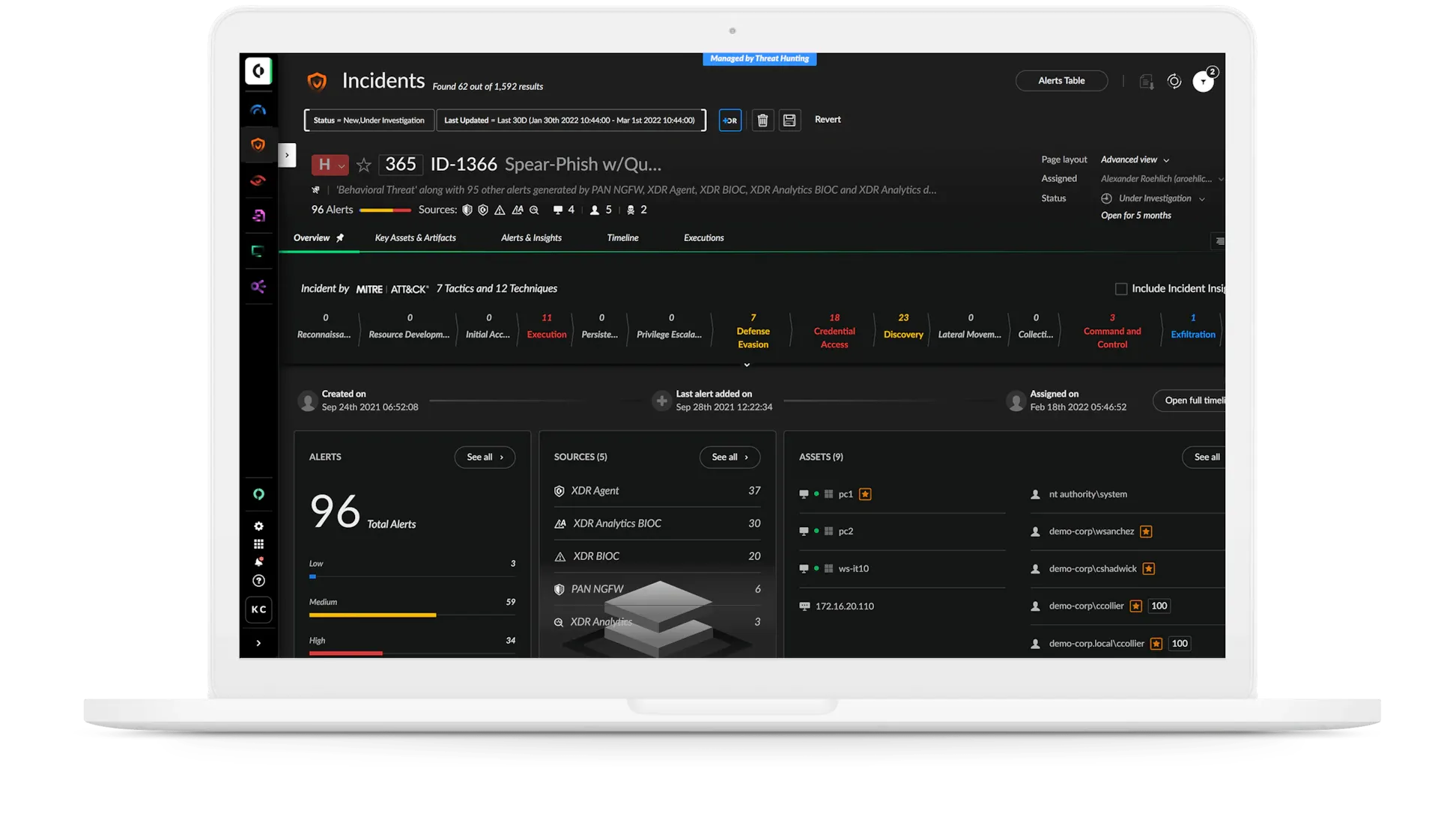
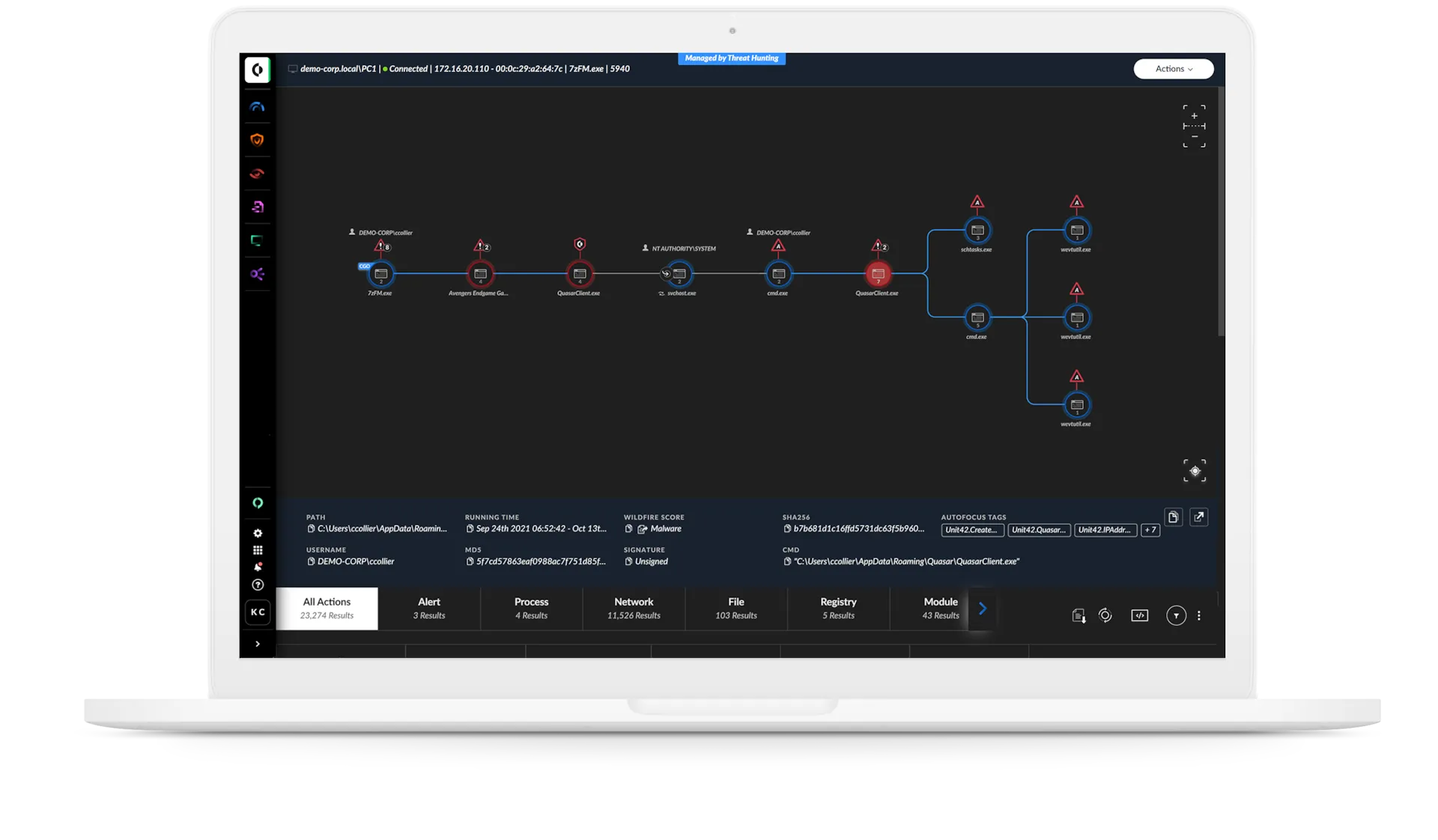
Extended Detection and Response (XDR) is a threat detection and response approach that provides holistic protection against cyberattacks, unauthorised access and malicious activity. XDR collects and correlates data from the organisation’s entire IT ecosystem, including endpoints, networks, cloud environments and applications, giving security teams comprehensive visibility.
This contextual understanding is critical for correctly identifying multi-stage attacks that would otherwise go unnoticed, and for shortening the time between detecting a threat and eliminating it. Palo Alto Networks Cortex XDR is the industry’s leading implementation of this approach.
| Area | Traditional solutions | XDR |
|---|---|---|
| Scope and integration | Focuses on a single layer such as endpoint, network or application; multi-vector attacks are missed. | Correlates endpoint, network, cloud and application data on one platform. |
| Contextual understanding | Produces isolated alerts; understanding the scope of an attack requires manual correlation. | Provides cross-layer context, making attacker TTPs easier to understand. |
| Detection and response | Analysis and response are largely manual, causing delays. | Fast detection with automation and ML; automated response with playbooks. |
| Real-time monitoring | Real-time monitoring capability is usually limited. | Continuous monitoring across the whole IT ecosystem and early-stage blocking. |
| Scalability | Adapting to new techniques and scaling is difficult and costly. | Adapts to new threats and scales with a growing infrastructure. |
XDR implementation guide
Assessment and planning
Analyse your current tools, processes and data sources; clarify your goals for threat detection, incident response and compliance.
Product selection
Compare solutions on capability, scalability and integration; work with partners that have a strong track record and local support capacity.
Integration and data collection
Identify sources such as network logs, endpoint data and cloud activity; make sure the data is enriched with context.
Integration with existing tools
Plan integration with SIEM, EDR and other tools through APIs and connectors.
Detection and response workflows
Tailor workflows to your risks; apply automated response for specific threat types.
People and training
Train your team to use the platform effectively; strengthen collaboration between security, IT and compliance teams.
Continuous monitoring and improvement
Measure KPIs such as MTTD and MTTR; improve the configuration through regular reviews.
Regulatory compliance
Align your implementation with KVKK, GDPR, HIPAA or industry-specific standards.
Ask Albisec’s experts
Contact us to learn more about our XDR solutions and partners. From a pilot deployment to phased rollout and 24/7 support, we are with you.
More Palo Alto Networks security services
Frequently asked questions
What is the difference between XDR and EDR?
EDR focuses only on telemetry from endpoints. XDR correlates endpoint, network, cloud and identity data on a single platform, shows the full picture of an attack and automates the response.
Does Cortex XDR replace our existing antivirus?
Yes. The Cortex XDR agent delivers next-generation antivirus (NGAV), exploit protection, behavioural threat protection and EDR in a single agent, and can replace traditional antivirus.
How do you plan a Cortex XDR rollout?
We start with a pilot group, tune policies and exceptions to your environment, then roll out in phases. This approach minimises business disruption and the risk of false positives.
Talk to our experts about your Palo Alto Networks project
A new deployment, a firewall migration or a support contract: tell us what you need and we will map out the right path with a free initial assessment.