
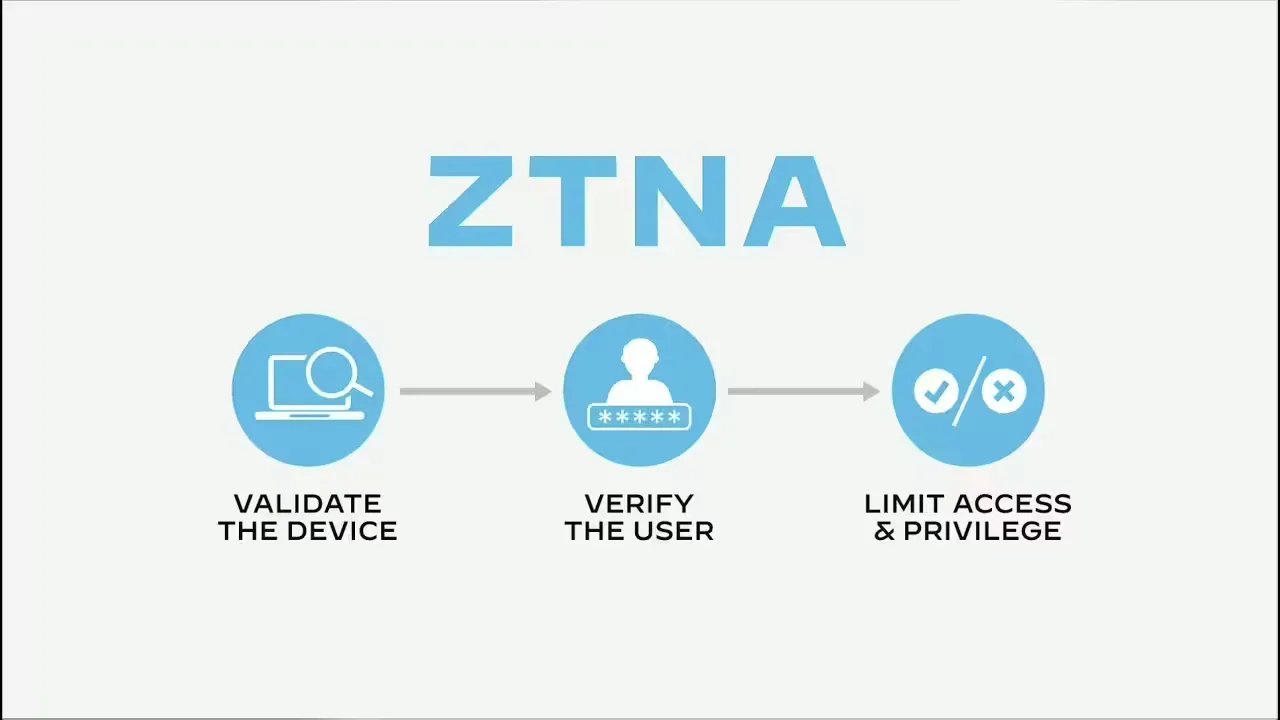
What is Zero Trust Network Access (ZTNA)?
Zero Trust Network Access (ZTNA) is a cybersecurity model built on the principle of “never trust, always verify”, unlike traditional security approaches. Traditional security solutions usually treat users or devices as trusted once they have been granted access to the network. ZTNA, in contrast, continuously verifies the identity of the user or device and every access request. By providing micro-segmentation, dynamic access control, continuous monitoring and threat detection for every user and device, ZTNA aims to meet modern security needs.
Palo Alto Networks and the ZTNA approach
Palo Alto Networks has embraced the importance of ZTNA and its innovative approach to cybersecurity, and offers a comprehensive Zero Trust solution. The Palo Alto Networks ZTNA solution works together with services such as Prisma Access and Prisma Cloud to provide secure access to corporate networks and cloud environments. These solutions offer dynamic access controls and threat detection based not only on the user’s identity but also on context.
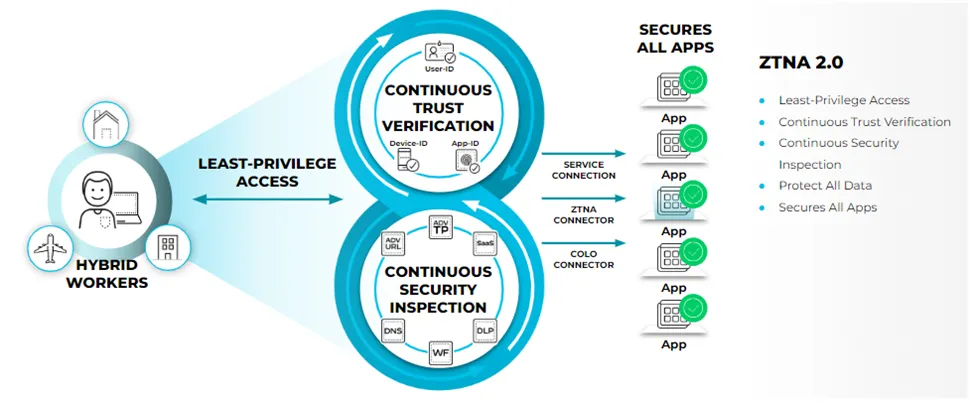
Prisma Access and ZTNA
Prisma Access is a cloud-delivered security service offered as part of the Palo Alto Networks Secure Access Service Edge (SASE) platform. It delivers secure, scalable access worldwide and includes ZTNA capabilities. Prisma Access supports ZTNA with the following core components:
- Dynamic access control: Access controls are applied based on criteria such as the identity, context (location, device type, time) and behaviour of users or devices. For example, additional verification can be required when a user connects from an unusual location.
- Micro-segmentation: All resources on the network are divided into micro-segments and separate security policies are applied to each resource. This limits the damage in case of a breach.
- Comprehensive threat detection and response: Prisma Access uses AI and machine learning for threat detection and response, identifying and responding to abnormal behaviour and malicious activity in real time.
- Secure Web Gateway (SWG): Provides users and devices with secure internet access and protects against web-based threats.
Prisma Cloud and application security
Prisma Cloud is the Palo Alto Networks platform that supports the ZTNA approach in cloud environments and provides security across every application layer. With security controls that integrate into DevOps processes, it secures modern cloud components such as containers, serverless applications and virtual machines.
Some of the capabilities Prisma Cloud offers:
- IDS/IPS and firewall capabilities: Continuously monitors network traffic and application activity to detect potential threats and intrusions.
- Application-layer security: Runs continuous security checks and provides vulnerability management to keep applications secure.
- Dynamic policy management: Applies dynamic, context-based security policies for applications running in different cloud environments (AWS, Azure, Google Cloud Platform).
ZTNA compared with traditional VPNs
ZTNA offers a more modern and flexible security approach than traditional VPN (Virtual Private Network) solutions. Traditional VPNs typically grant a user or device access to the network and then treat it as trusted. In that case, insider threats or accounts with compromised credentials can harm the network. ZTNA minimises these threats by continuously verifying and monitoring.
Key differences between VPN and ZTNA:
- Access control:
- VPN: Provides network-level access control; once access is granted, the whole network may be reachable.
- ZTNA: Allows users and devices to reach only specific applications and resources. Security is enforced at the application level rather than the network level.
- Security model:
- VPN: Usually relies on a perimeter model; once inside, the user is assumed to be trusted.
- ZTNA: Always requires verification; no user or device is trusted in advance.
- Performance and user experience:
- VPN: All traffic passes through a VPN tunnel, which can cause latency and performance degradation.
- ZTNA: Optimises traffic and provides direct access, delivering a better user experience.
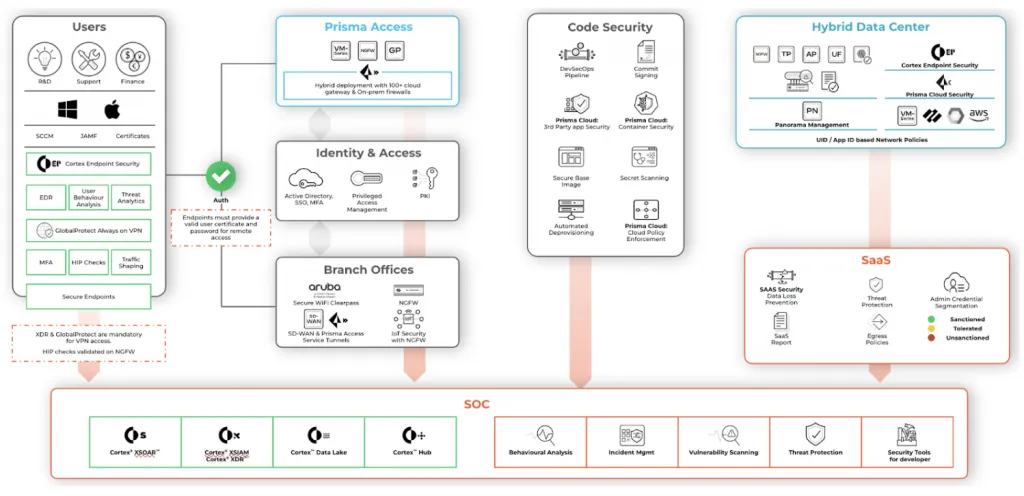
ZTNA use cases
- Remote work and mobile users: Lets employees who work remotely or use mobile devices access corporate resources securely.
- Supplier and partner access: Provides external users (suppliers, business partners) with secure access to specific resources.
- Protecting critical data: Protects important data and applications from unauthorised access.
The future of ZTNA
ZTNA is becoming increasingly important in cybersecurity, with room to grow in areas such as integration with AI and machine learning. ZTNA is expected to keep delivering adaptive security in a world where cyber threats are constantly evolving, and it will continue to play an important role in organisations’ digital transformation.
This article is a comprehensive guide for anyone who wants an in-depth understanding of the Palo Alto Networks ZTNA solution and of ZTNA in general, including its technical details, advantages and limitations. If you are planning a move from VPN to ZTNA 2.0 with Prisma Access, talk to our engineers.